How Do You Shorten Fibro Flares?
Fibromyalgia is a debilitating condition that is characterized by chronic pain and fatigue. Despite how much my symptoms have improved over the years (and they really have), I still have bad days.
It’s rare that I have a major pain flare, but sometimes the exhaustion and fatigue take over, leaving me feeling couch-locked and fogged in. I can’t think and I don’t really want to move.
If you ask me at the end of one of those days what I did that day the answer will be nothing, or I can’t remember.
Related: What causes fibro flares?
So, how do I get through bad fibro flare days and make sure that a bad day is just a bad day and doesn’t turn into a bad week or worse?
 6 Ways I Shorten Fibro Flares
I make lists to help myself cope with Fibro Fog
I live by lists now. I was never a list maker before Fibro. I could remember what I needed to do, what I needed to pick up at the store, all the things. It was just there. It’s not there anymore. Fibro fog is real and it’s probably my worst symptom.
Related: Symptoms & Signs of Fibromyalgia
The only way I can really cope with it is to make lists. I use Google Tasks and also Google Keep to help me keep up with things.
I have a To Do list for every day, and on bad days (or just days when things can’t get done) items get shifted to a future day. When I think of something that I need to do later, I add it to my list. When I think of an item I need from the store, I add it to that list. This is especially helpful on bad days because sometimes despite the fog I’ll think of something I need to do, but I’ll know that if I tried to do it then it would not be done right.
So, I put it on a list to be done at a later day.
I drink lots of water to help my body rehydrate
Lack of water is one of the things that often leads to a fatigue flare for me. Often, I’ve overdone it the day before and not drank enough water in the process.
I generally drink a lot of water (if I only refilled my 24oz bottle twice in a day something is probably wrong… and I keep a 32oz bottle by my bed that usually get drained first thing in the morning).
So, on fatigue days I tend to drink a lot more water and I find that doing so often has me feeling better much sooner, allowing me to enjoy my evening
I am kind to myself because I should always be
I remind myself constantly that this is just a bad day and that as long as I do what I need to do it will only be a bad day – that tomorrow I will feel better and be able to get things done.
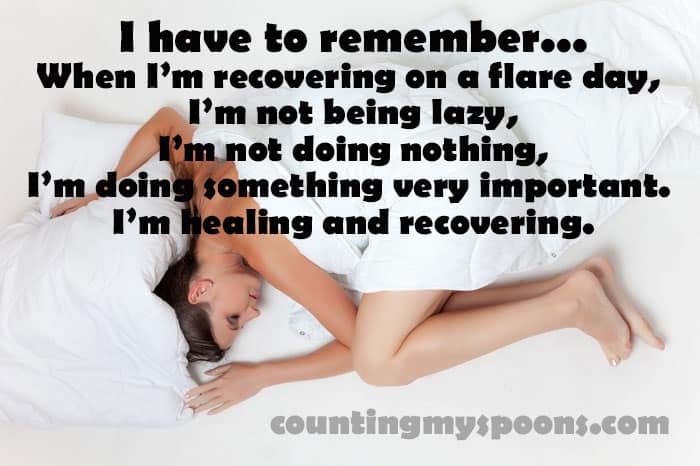
I think this helps me more than anything else. I have to remind myself that on these bad days I’m not being lazy, I’m not “doing nothing”. My body needs that rest and I need to give my body what it needs. I am very much doing something, because my body is hard at work, healing.
Staying optimistic when you have fibromyalgia is not always easy, but it is often a key step to coping with this condition. Convince yourself that no matter how much pain or depression you are in, it’s temporary and it is going to change for the better.
A positive mental attitude won’t heal you, but it certainly makes living with difficult times a whole lot easier.
Related: The importance of loving yourself despite chronic pain
A positive mental attitude won’t heal you, but it certainly makes living with difficult times a whole lot easier. Share on XI surround myself with light to help keep depression at bay
It is so easy on bad days to just want to hide in a dark room and sleep. It would be so easy to allow the darkness to overtake me, to feel sorry for myself, and let a single bad day turn into a bad week which can then easily become a bout of depression.
Instead, I force myself to get up and at least move to the couch. I also open the blinds and let the sun shine in. I try to walk outside and get some direct sunlight (assuming it’s not too cold), even for just a few minutes.
Related: The relationship between stress, depression & fibromyalgia
I avoid things that would add stress
Stress is one of my worst triggers. It’s often the reason I need that day of rest. So, on the days when I feel bad I avoid things that might add to my stress.
I stay in a nice quiet environment (aka I stay home), I avoid watching the news and often even avoid social media (especially if I notice that there’s some big new news story that everyone is freaking out about). My mind and body just can’t handle that stress.
I also tend to want to be alone on those bad days, because being alone allows me to not have any external pulls on my attention, or make me worry that someone else isn’t getting what they need from me.
That said if there’s someone who seems to generally make me feel better and they are able to spend time with me on those days, I am open to it.
I am not ashamed to ask for help
While generally I can take care of myself even on bad days (and often have no choice but to do so). I’m not ashamed to ask for help if I need it.
Whether that’s asking someone to bring me food because I just don’t feel up to preparing something, or asking someone to open a jar for me because I’m feeling weak.
Being ashamed to ask for help is a negative feeling and those negative feelings only serve to make me feel worse mentally. Yes, it’s often hard to ask for help, and yes there are people who will make us feel bad for it (and those are the people we want to avoid on bad days if we can), but once the request is made and someone helps, everyone feels better for it.
There are some things we can do on bad flare days to help make sure those bad days don't last any longer than they have to. Share on XRelated: Getting past the sadness & isolation of chronic illness
There are many things we can do to make coping with Fibromyalgia a little bit easier. These are just a few of the things that I try to do (on bad days and good days really).
The most important thing we can do though, is know our limits. Knowing our limits helps us avoid bad days, but it also sets the tone for making sure that we don’t overdo it on those bad days.
It may take time to figure out what things aggravate your symptoms and send you into flares, but as you do notice things make sure to add them to your list so that you can avoid them later.
And, as you find things that help reduce your symptoms make those things a part of your daily life, to help minimize the bad days.
What do you do to shorten your flares? Share your tips in the comments below.
Related:




Joan Zatorski says
I’ve been diagnosed with Fibromyalgia for over 30 years. In the midst of the worst flare I’ve had in five years, I discovered your blog and read “How to Shorten Fibro Flare”. Although I already knew (and frequently practice) the six suggestions, it was very helpful to see them written down by another person with Fibro. I’m looking forward to reading more of your work. Many thanks for being open and reassuring.
Julie says
I’m glad I could help make your day even a little easier. We all need the reminders sometimes (just because we know in our head what we should do it’s easy to find ways to justify not doing it).